
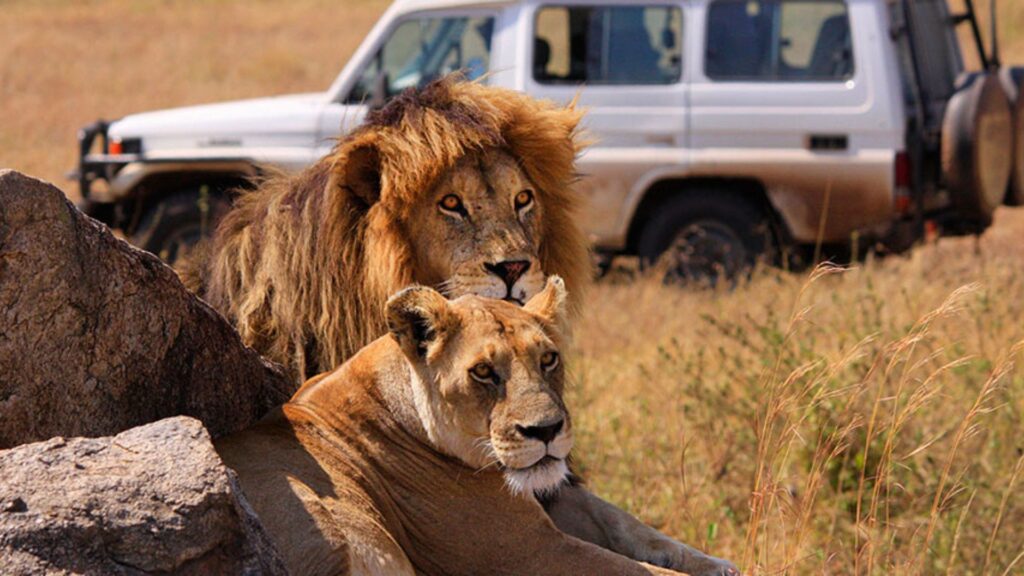
Lions are among Africa’s most iconic predators, yet tourists in Tanzania’s national parks rarely face attacks while on safari. The key reason is that safari vehicles are large, imposing, and non-threatening when approached correctly. Lions instinctively perceive these jeeps as non-prey objects and maintain a respectful distance. Over decades of wildlife tourism, the lions of Serengeti, Ngorongoro, and other parks have grown accustomed to the presence of humans in vehicles, associating them with neutrality and safety rather than threat or food.
Tour operators and guides follow strict safety protocols, ensuring that vehicles remain at a safe distance from wildlife and avoid disruptive behavior. This includes staying inside vehicles at all times, turning off engines when necessary, and minimizing noise. Lions quickly learn that safari vehicles do not pose danger, are not part of their hunting routines, and do not provoke territorial aggression. The predictable behavior of tourists, guided by experienced rangers, reinforces the lions’ lack of threat perception.
The natural behavior of lions also contributes to the safety of safari-goers. Lions are strategic predators, targeting vulnerable animals rather than large, unfamiliar objects. Safari vehicles are too large to be seen as easy prey, and the movement and patterns of tourists are carefully monitored to prevent accidental encounters with young cubs or hunting prides. By respecting lion territories and adhering to park rules, visitors enjoy close-up wildlife experiences without putting themselves or the animals at risk.
Tourism practices in Tanzania have evolved to promote coexistence. Guides educate visitors about animal behavior, park regulations, and ethical wildlife observation. This knowledge reduces risk and ensures that interactions remain safe for both humans and lions. National parks strictly enforce rules regarding proximity, feeding, and interaction with wildlife, which preserves natural instincts while allowing tourism to thrive responsibly.
In summary, lions’ avoidance of safari vehicles results from a combination of their natural instincts, habituation to non-threatening humans, and responsible tourism practices. Visitors can safely enjoy up-close encounters with these majestic predators while guides maintain a controlled, respectful environment. This balance allows for unforgettable safari experiences that showcase the power and beauty of lions without compromising safety.